Hand Arm Vibration Syndrome or HAVS
Hand Arm Vibration Syndrome or HAVS.
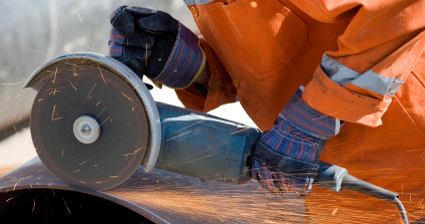
Some seafarer operates equipment that causes this syndrome, like needle guns and grinders. Prolonged exposure to power tools with the lack of proper usage and limits of use may result to HAVS, which will lead to permanent disability if not detected and treated early. Tingling of fingers, numbness and pain in the arm and wrist are some of the common symptoms of HAVS.
Hand-arm Vibration Syndrome
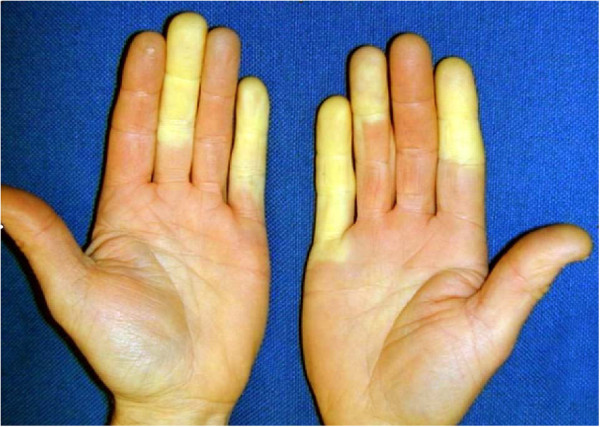
The hand-arm vibration syndrome causes changes in sensory perception which can lead to permanent numbness of fingers, muscle weakness and, in some cases, bouts of white finger. It is caused by working with vibrating tools. It would be unusual for you to develop hand-arm vibration syndrome unless you had used vibrating tools for at least ten years. If you stop working with vibrating tools it may prevent mild symptoms from becoming worse.
What is hand-arm vibration syndrome (HAVS)?
HAVS causes symptoms in fingers, hands and arms, as a result of using vibrating tools. It used to be called vibration white finger. The name was changed to HAVS, as other symptoms may occur in addition to white fingers.
What causes hand-arm vibration syndrome (HAVS)?
HAVS is caused by repeated and frequent use of hand-held vibrating tools – for example, power drills, chainsaws, pneumatic drills, etc. It may also be caused by holding or working with machinery that vibrates. It is not clear how vibration causes the condition. It is probably due to slight but repeated injury to the small nerves and blood vessels in the fingers. Over time these may gradually lose some of their function and cause symptoms. Possibly, up to 1 in 10 people who work regularly with vibrating tools may develop HAVS.
What are the symptoms of hand-arm vibration syndrome (HAVS)?
Nerves are affected initially, leading to changes in sensation. This can then be followed by Raynaud’s phenomenon resulting from changes in the blood vessels and resulting in a white finger. These changes also lead to muscular aches and pains.
Nerve symptoms
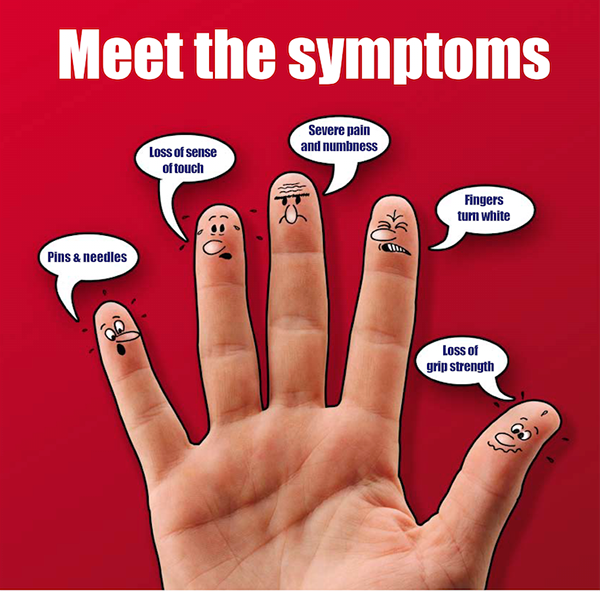
Loss of feeling (numbness) and/or pins and needles (tingling) in one or more fingers are usually the early features. It may be mild and just affect the tips of the finger(s) and come and go. In severe cases a permanent numbness may extend along affected fingers. This may cause clumsiness and difficulty in doing fine tasks. For example, it may become difficult to fasten buttons or to handle coins, screws, nails, threads, etc. In many people the severity of nerve symptoms is somewhere in between these two extremes. Sometimes one finger is badly affected with other fingers only mildly affected.
Raynaud’s phenomenon – white finger symptoms
Raynaud’s phenomenon comes in bouts or attacks that are triggered by cold weather or touching a cold object. A typical bout of Raynaud’s phenomenon is as follows:
- At first, the fingers go white and cool. This is due to the small blood vessels narrowing (going into spasm).
- They then go a bluish color. This is due to the oxygen being used up from the reduced blood supply of the narrowed blood vessels.
- They then go bright red. This is due to the blood vessels opening up again (dilating) and the return of a good blood flow. This may cause tingling, throbbing and pain.
Some people do not have the full classic color changes but still develop bouts of uncomfortable, pale, cold fingers. The duration of each bout of symptoms can last from minutes to hours. The amount of pain or discomfort varies between people. Symptoms usually go after each bout but one or more bluish fingers may persist in severe cases.
Vibrating tools are just one cause of Raynaud’s phenomenon. There are other causes too.
Aches and pains
Minor damage to the muscles, joints and bones may cause aches and pains in the hands and lower arm. The strength of your grip may be weakened.
How do symptoms progress?
You may have some loss of feeling (numbness) or pins and needles (tingling) which comes and goes. This may be followed by bouts of Raynaud’s phenomenon on cold, wet and windy days affecting the ends of one or more fingers. Symptoms may remain mild but can progress if you continue to work with vibrating tools. Vibration itself rarely triggers a bout of Raynaud’s phenomenon. It is cold weather or cold conditions that trigger Raynaud’s phenomenon.
As the condition develops, numbness becomes permanent. This leads to muscle weakness and wasting. Bouts of Raynaud’s phenomenon will become more frequent (and also in the summer) although usually only if your hands are wet.
In some cases the symptoms develop months or years after finishing working with vibrating tools.
How is hand-arm vibration syndrome (HAVS) diagnosed?
Your description of your symptoms and the fact that you have worked for a long time with vibrating tools may be enough to clinch the diagnosis. However, tests are sometimes needed, especially if you are involved in a compensation claim. The tests may include checking your grip strength, your ability to perform fine hand movements and the response of your fingers to cold.
Can hand-arm vibration syndrome (HAVS) be prevented?
The following steps are thought to help prevent HAVS in workers who use vibrating tools:
- Hold tools as loosely as possible and in varying positions.
- Ensure that tools are well maintained.
- Use tools correctly and use the right tool for the job. The aim is not to need to use excessive grip, nor to use a tool for longer than necessary.
- Take regular breaks of at least 10 minutes away from the tool. Short bursts of work are better than long periods of work without a break.
- Keep warm while at work – especially your hands.
- You should not smoke – the chemicals in tobacco can affect blood flow.
What should I do if symptoms develop?
If you suspect that you have symptoms of hand-arm vibration syndrome (HAVS) then see your doctor. Also, report your concerns to your employer, or work doctor (if there is one).It is your employer’s responsibility to make sure that you work in a safe and acceptable working environment.
What is the treatment for hand-arm vibration syndrome (HAVS)?
Stop using vibrating tools if possible
This may prevent symptoms from getting worse. Bouts of Raynaud’s phenomenon may ease off if symptoms are mild and you stop working with vibrating tools. However, it is not clear whether nerve symptoms can improve once they have developed. If possible, you should consider a change of job.
Source : https://patient.info/health/hand-arm-vibration-syndrome-leaflet
Photos : http://brushdestructor.com/